Publications
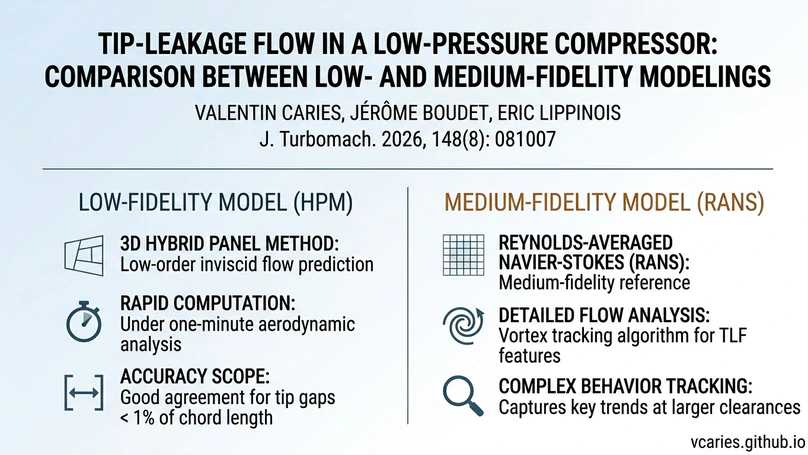
A low-order 3D Hybrid Panel Method predicts the flow around low-pressure compressor rotors and feeds dedicated tip-leakage models — in under a minute per case. Benchmarked against RANS on the LMFA NACA65 rotor, it reproduces rotor aerodynamics well and tip-leakage trends accurately for small tip gaps, supporting fast early-stage design.
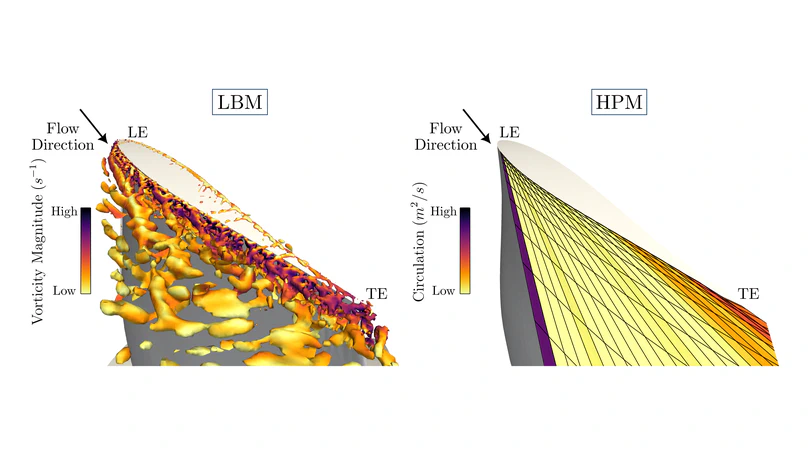
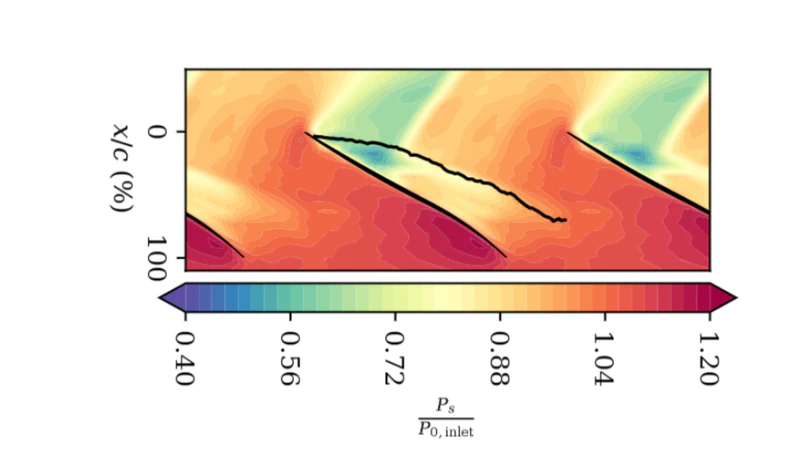
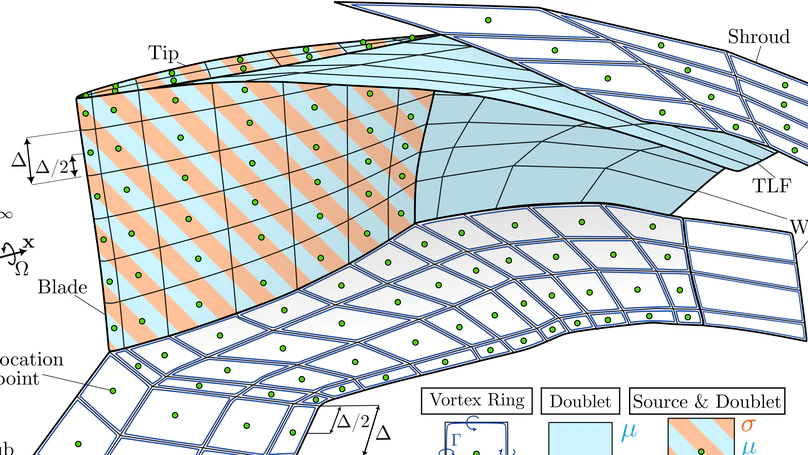
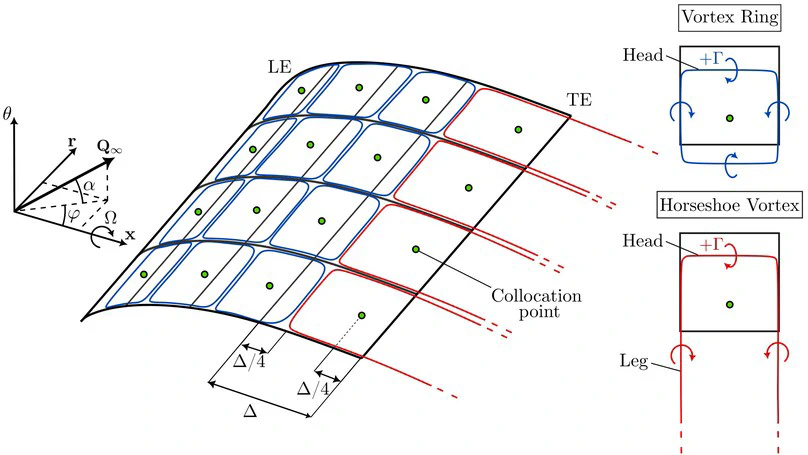
🏆 IJTPP Editors’ Choice. This paper introduces a low-order, three-dimensional method for predicting inviscid flow around shrouded fans, aimed at early-stage design. By combining the vortex lattice and panel methods with a mixed boundary condition, it allows efficient exploration of design options. The method also models tip-leakage flow through an iterative algorithm. A periodicity condition is validated, reducing computational demand, with calculations completed in under a minute. The method agrees well with RANS for mean flow and tip-leakage characteristics, though some discrepancies arise at lower mass flow rates.