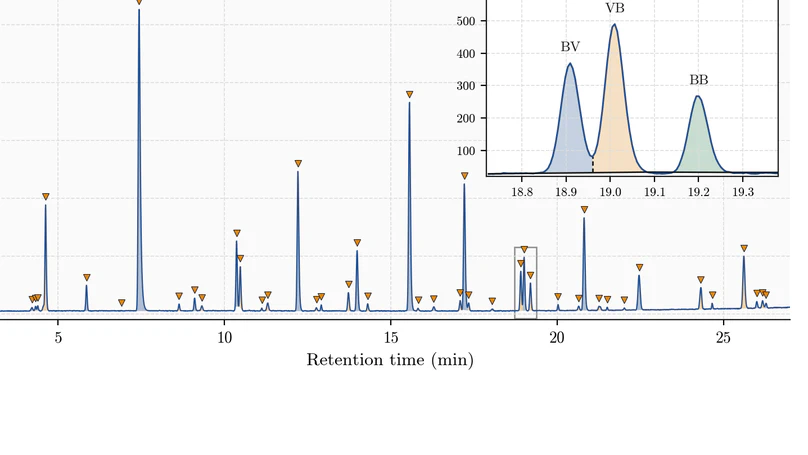
How do you turn hours of manual peak picking into an analysis that anyone can rerun and audit? This case study presents a Python pipeline that reads raw GC-MS acquisitions, corrects the baseline, detects and integrates peaks following the vendor methodology, and delivers interactive reports and tidy tables, validated against results produced by hand.