
Valentin Caries
Research Engineer @ IFPEN · PhD · Scientific Python | CFD | Simulation
IFP Energies nouvelles (IFPEN)
Biography
I am Valentin Caries, a PhD in aerodynamics (École Centrale de Lyon, 2025) and research engineer. I build fast, reliable scientific software for fluid mechanics, at the meeting point of physics, numerical methods and software engineering: I turn physical models into performant, maintainable code and validate it against high-fidelity simulations and experiments. I currently work at IFP Energies nouvelles (IFPEN) on multiphase pump systems, after a PhD carried out in partnership with Safran Aircraft Engines.
During my PhD I developed a low-order, three-dimensional aerodynamic solver that predicts the flow around compressor and fan rotors, including the notoriously difficult tip-leakage flow, in seconds instead of hours, making it usable for early-stage design exploration. I have worked across the full computational spectrum, from wall-resolved Large Eddy Simulation (LES) on HPC clusters to reduced-order panel and vortex-lattice methods, and built the data and post-processing tooling that ties it all together.
Alongside my research, I am open to selected freelance and consulting work in scientific Python, CFD and simulation, data engineering, and high-performance computing. If you need someone who understands both the physics and the code, let’s talk.
- Scientific Python development
- Computational Fluid Dynamics (CFD)
- Multiphase flow & turbomachinery
- Reduced-order & multi-fidelity modeling
- High-performance computing (HPC)
PhD in Aerodynamic Modeling for Turbomachinery, 2022 – 2025
École Centrale de Lyon
Advanced MSc in Aerospace Propulsion, 2020 – 2021
ISAE-SUPAERO
MSc in Mechanical Engineering (dual degree), 2019 – 2020
École Centrale de Lyon
Engineering degree, Mechanical Engineering, 2017 – 2020
Polytech Lyon
Skills & Services
I help engineering and research teams turn complex physics into fast, reliable, well-tested software and turn raw simulation data into insight. Open to selected freelance and consulting missions.
🐍 Scientific Python
Numerical methods, solvers and reusable packages. Clean, documented, tested code with NumPy/SciPy, performance profiling and packaging.
🌀 CFD & Simulation
RANS & LES workflows, reduced-order and multi-fidelity aerodynamic models, mesh handling, solver setup, verification & validation.
⚙️ Data Engineering & HPC
Post-processing pipelines, large dataset handling, job automation on HPC clusters (SLURM), reproducible and parallel workflows.
Experience

Research and scientific development on multiphase pump systems.
- Numerical modeling and CFD of multiphase flows.
- Experimental campaigns and data analysis.
- Scientific Python development for simulation, data processing and analysis.

Multi-fidelity modeling of the tip-leakage flow for an axial compressor rotor in compressible flow. PhD defended on 11 June 2025.
- Designed and implemented a 3D low-order aerodynamic solver (panel + vortex-lattice methods) in Python, reducing rotor flow predictions from hours to seconds.
- Validated the models against RANS simulations and experiments; published in peer-reviewed journals and international conferences.
- Built the supporting data processing and visualization tooling.
- Developed and automated RANS simulation methodologies.
- Delivered Python tooling to streamline pre- and post-processing.
Wall-Resolved Large Eddy Simulation (WRLES) of 2.5D propeller configurations.
- Ran high-fidelity LES on HPC clusters and developed the post-processing methodology in Python.

- Built a Python model for Shell Eco-marathon race-strategy optimization (vehicle dynamics, energy management).
Projects
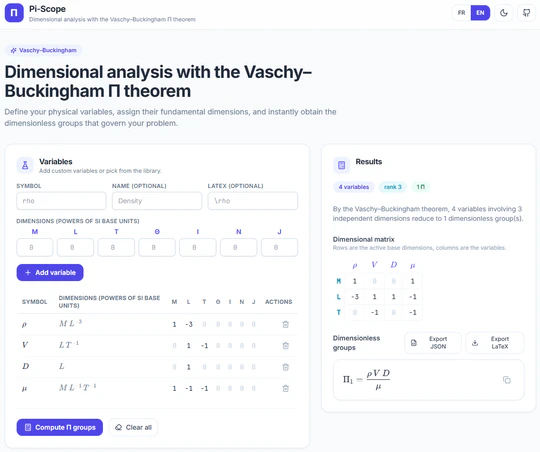
Selected engineering & software projects
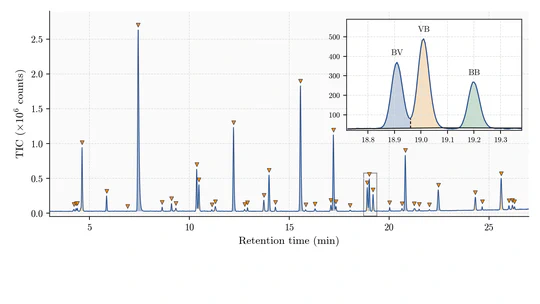
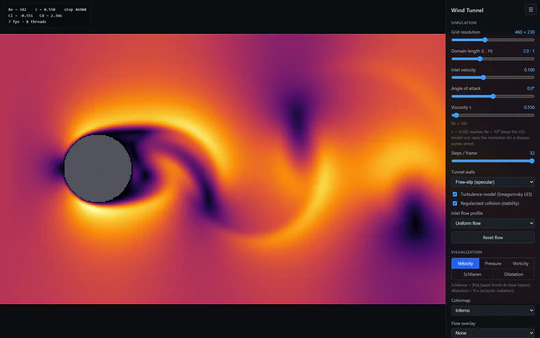
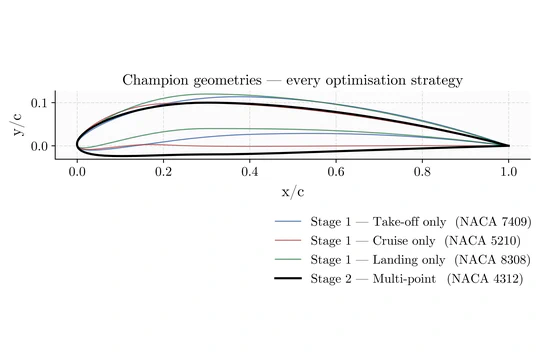
Recent publications
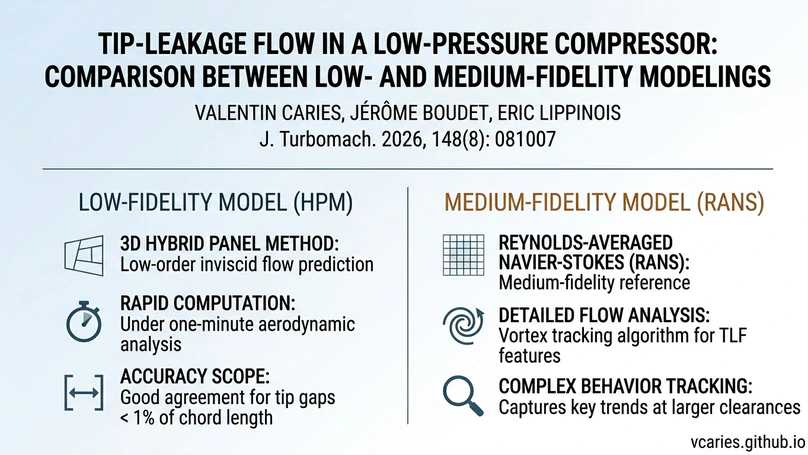
A low-order 3D Hybrid Panel Method predicts the flow around low-pressure compressor rotors and feeds dedicated tip-leakage models — in under a minute per case. Benchmarked against RANS on the LMFA NACA65 rotor, it reproduces rotor aerodynamics well and tip-leakage trends accurately for small tip gaps, supporting fast early-stage design.
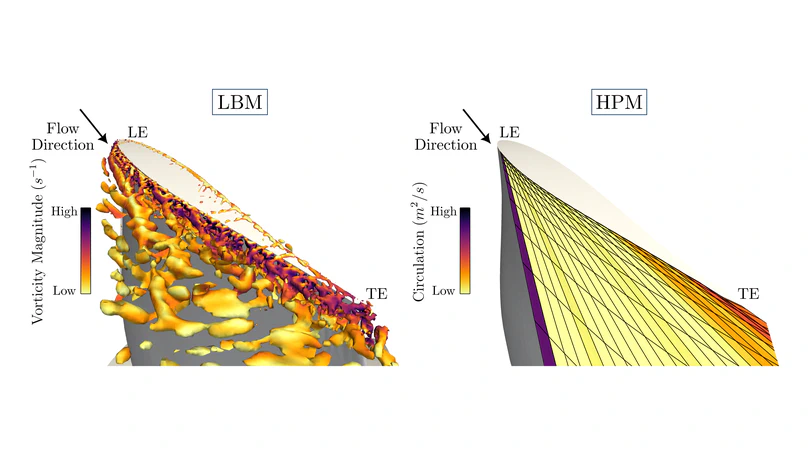
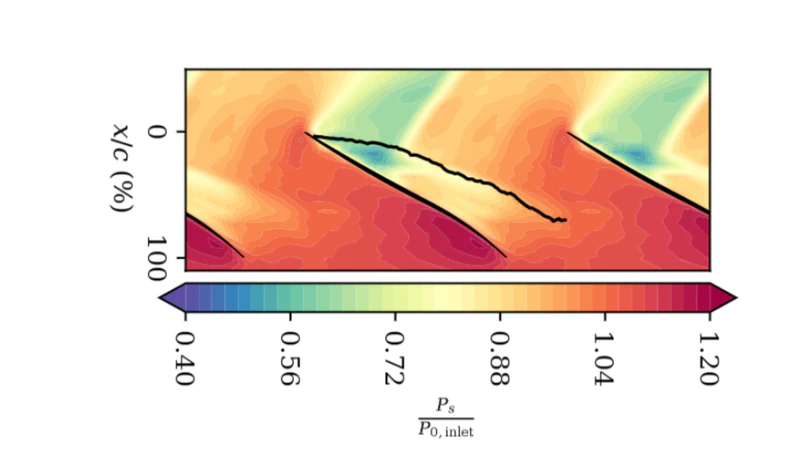
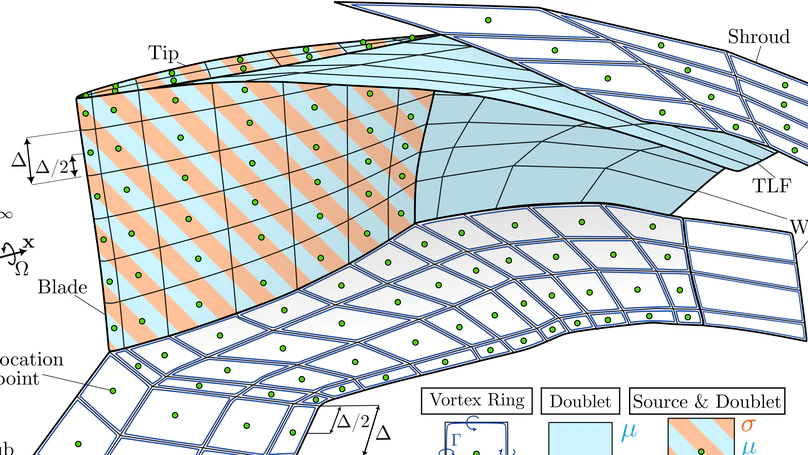
🏆 IJTPP Editors’ Choice. This paper introduces a low-order, three-dimensional method for predicting inviscid flow around shrouded fans, aimed at early-stage design. By combining the vortex lattice and panel methods with a mixed boundary condition, it allows efficient exploration of design options. The method also models tip-leakage flow through an iterative algorithm. A periodicity condition is validated, reducing computational demand, with calculations completed in under a minute. The method agrees well with RANS for mean flow and tip-leakage characteristics, though some discrepancies arise at lower mass flow rates.
Let’s work together
Freelance & consulting: scientific Python, CFD, simulation, data engineering
Have a project in mind, or a problem at the boundary of physics and code? Reach out on LinkedIn.